|
|
|
| Marcus Landslide Virtual Field Trip |
| McDowell Mountain Regional Park, AZ |
|
|
|
|
|
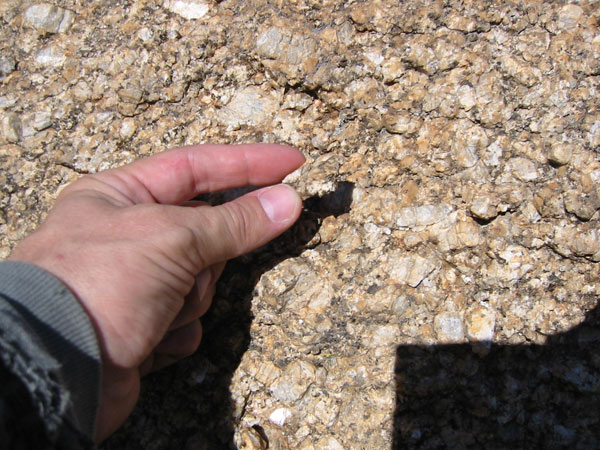
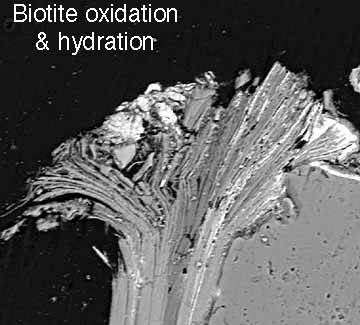
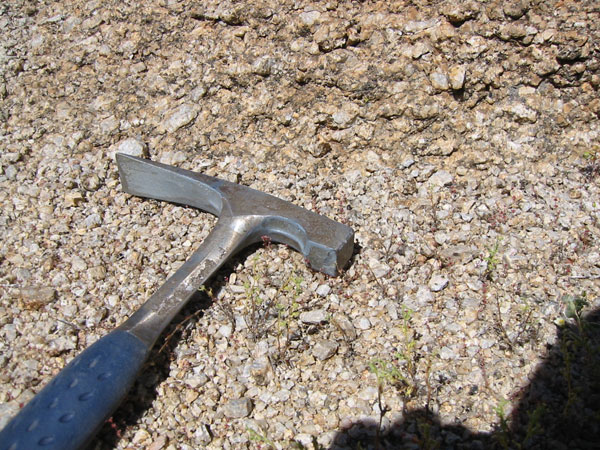
Grus or Grusification - The chemical breakdown of granite into the individual minerals is called grusification, where the decayed granite sand is called grus. Granite weathers to grus much more rapidly in the soil than exposed to the atmosphere. In the subsurface water remains contact with rock surfaces for longer periods of time. The weathering of granite into grus is made possible by the decay of the black mineral biotite. This graphic show an electron microsope view of biotite that is weathering.
The iron in the biotite oxidizes (rusts), and the very bright bits of iron oxide split apart the biotite. The biotite also undergoes a chemical change to a clay mineral that absorbs water. This hydration expands the biotite further, destroying the good fit between all of the other minerals like quartz and feldspar. Biotite weathering does the same thing as pulling the Ace of Spades from the middle of a "house of cards". So how does this all relate to the lanslide?
The landslide boulders that you see have a "matrix" between them of grus and grus that has weathered even further to clay minerals. Without this matrix of highly weathered material, the landslide would never have occurred. The weathered grus absorbed the water. The weathered and saturated grus added lubrication that kept the landslide in motion. The boulders get your attention, but the weathered grus between the boulders is more important in making the landslide happen. |