|
Follow the Water Stop 1 of 13 (Site 1f) |
|
|
NAVIGATION: BACK TO STOP 1 MAIN PAGE
| GPH 211 - GEOMORPHOLOGY |
| MODULE FIVE - FOLLOW THE WATER |
|
Follow the Water Stop 1 of 13 (Site 1f) |
|
|
|
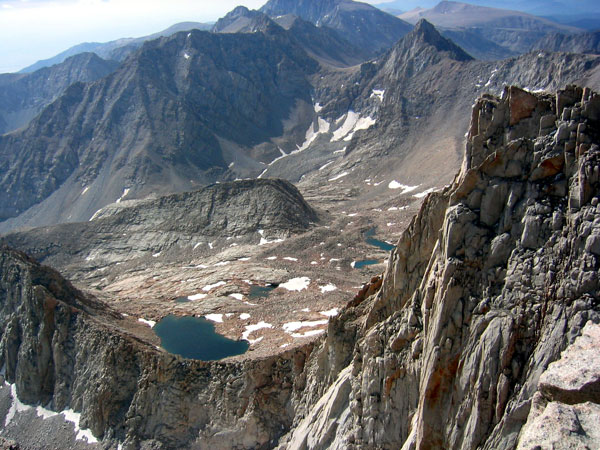
Follow the Water Stop 1 of 13 (Site 1f) Arêtes: Because glaciers carve into their
mountain
valleys wherever ice touches rock, they tend to widen narrow rock
canyons into
wider "U-shaped"
canyons (if the rock is weak enough and the glacier
is trying to establish an equalized slope). When two glacier
valleys meet
side to side, the valley wall they share becomes extremely steep and
known as
an Arête. The
swooping rock ridge in the lower and upper
right portion of
the image is an arête extending east of <> |