|
Follow the Water Stop 10 of 13 (Site 10c) |
|
|
NAVIGATION: BACK TO STOP 10 MAIN PAGE
| GPH 211 - GEOMORPHOLOGY |
| MODULE FIVE - FOLLOW THE WATER |
|
Follow the Water Stop 10 of 13 (Site 10c) |
|
|
|
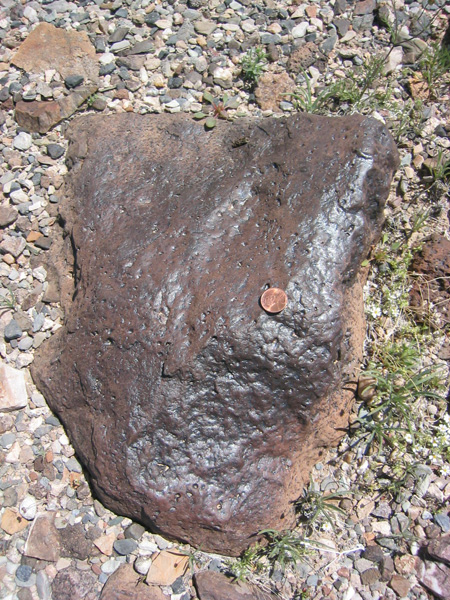
Follow the Water Stop 10 of 13 (Site 10c) Rock Varnish: This boulder is sitting on a relatively stable
alluvial-fan surface that has not seen activity in probably a
hundred thousand years. The deep and dark sheen on the rock is
called rock varnish (sometimes also called desert varnish). Rocks
with rough textures, like this basalt boulder, trap dust particles from
the passing wind. In the dust particles are small amounts of
manganese. Microorganisms oxidize the manganese, and this process
in turn cements clay minerals in the dust to the rock. Overtime,
layers of manganese build up and generate the eye catching dark coating
on the rocks that are stable for long periods of time. To learn
more about rock varnish and how it forms, you are welcome to read
this paper. Tanzhuo Liu, Ph.D. of Arizona
State University in Geography, and now a scientist at Columbia
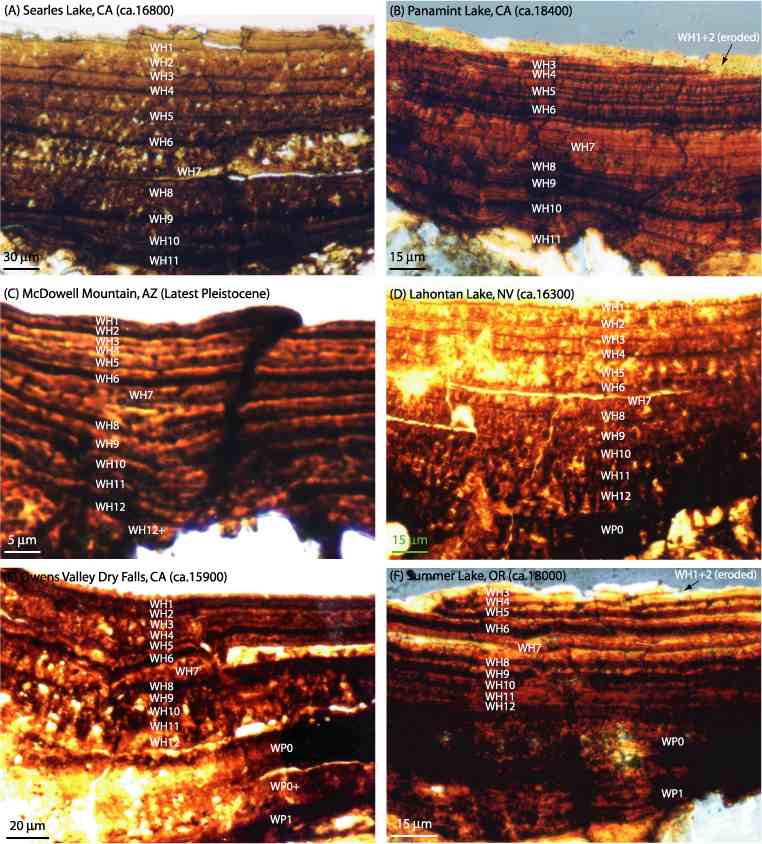
University, has developed a method to estimate the ages of land
surfaces using the layering pattern of black, orange and yellow layers
that are deposited in varnish. These are microscope pictures of
cross-sections of varnish from shorelines of different lakes and
features in the region, including the stops of Searles Lake, Panamint
Lake, and even Dry Falls. The black layers (WH for Wet Holocene)
indicate wetter periods when more manganese was deposited. If you want
to learn more about this amazing way to figure out the past, just visit
the VML website.
|